
Criminal Cases in Jefferson Parish Courts
The Twenty-Fourth Judicial District Court hears Jefferson Parish felonies and other district-level criminal matters. Its 16 elected divisions, Criminal Commissioner’s Court, and related offices operate in the Thomas F. Donelon Building at 200 Derbigny Street in Gretna. First Parish Court at 924 David Drive in Metairie handles East Bank misdemeanors and traffic matters. Second Parish Court at 100 Huey P. Long Avenue serves the West Bank. A municipal ordinance case may remain with the relevant city court, while specified juvenile matters go to Jefferson Parish Juvenile Court.
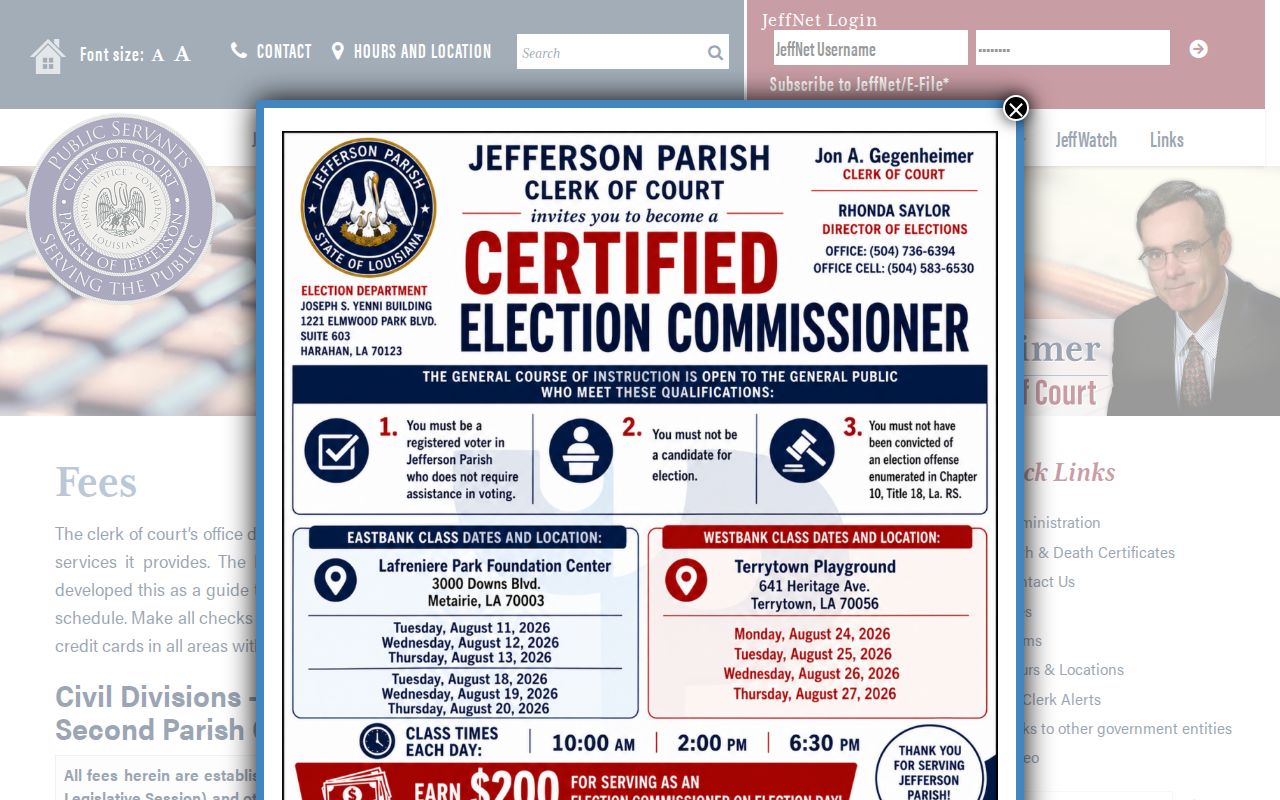
The Jefferson Parish Clerk of Court is custodian of filed district and parish court records. The Clerk’s official site is the right starting point for JeffNet, office details, and copy services.
The official Clerk homepage provides a useful view of that local access point.
It helps keep the court file separate from the arrest report held by police and the booking record held by JPSO.
JeffNet Reaches Two Different Eras
JeffNet access covers searchable 24th JDC criminal activity from April 28, 1994 forward and Parish Court criminal activity from 1990 forward. Yet 24th JDC criminal document images extend as far back as 1840. Those dates describe two different layers. The activity index is the practical route to modern cases, while the deeper image archive may help with old court and family research. Parish Court folder images vary with case status, so an index hit does not guarantee that every scanned page is online.
The Clerk offers a $5 day pass for 24 hours or a $50 monthly plan per user ID. The monthly charge also carries the posted 2.75 percent card transaction fee. The official access screen shows those choices.
This paid tier offers remote history and images, but free public inspection remains available at the proper Clerk counter.
How to Search Jefferson Parish Case Records
Start with the narrowest known identifier. A case number is stronger than a common name. When only a name is known, confirm any possible match through the filing date, charge, court, and division. Date of birth may be redacted, so it should not be treated as a promised public field.
- Open JeffNet and choose the criminal case area after obtaining the appropriate access plan.
- Use the party-name or case-number route shown by the live system; do not assume a field is mandatory unless JeffNet marks it so.
- Compare the returned court, filing date, charge, and division to the facts already known.
- Read docket entries in order, then locate the disposition and sentence rather than stopping at the first charge.
- Order plain or certified copies from the Clerk when the actual filed document is needed.
The official JeffNet criminal search image confirms the criminal-case application, while login controls gate the live criteria.
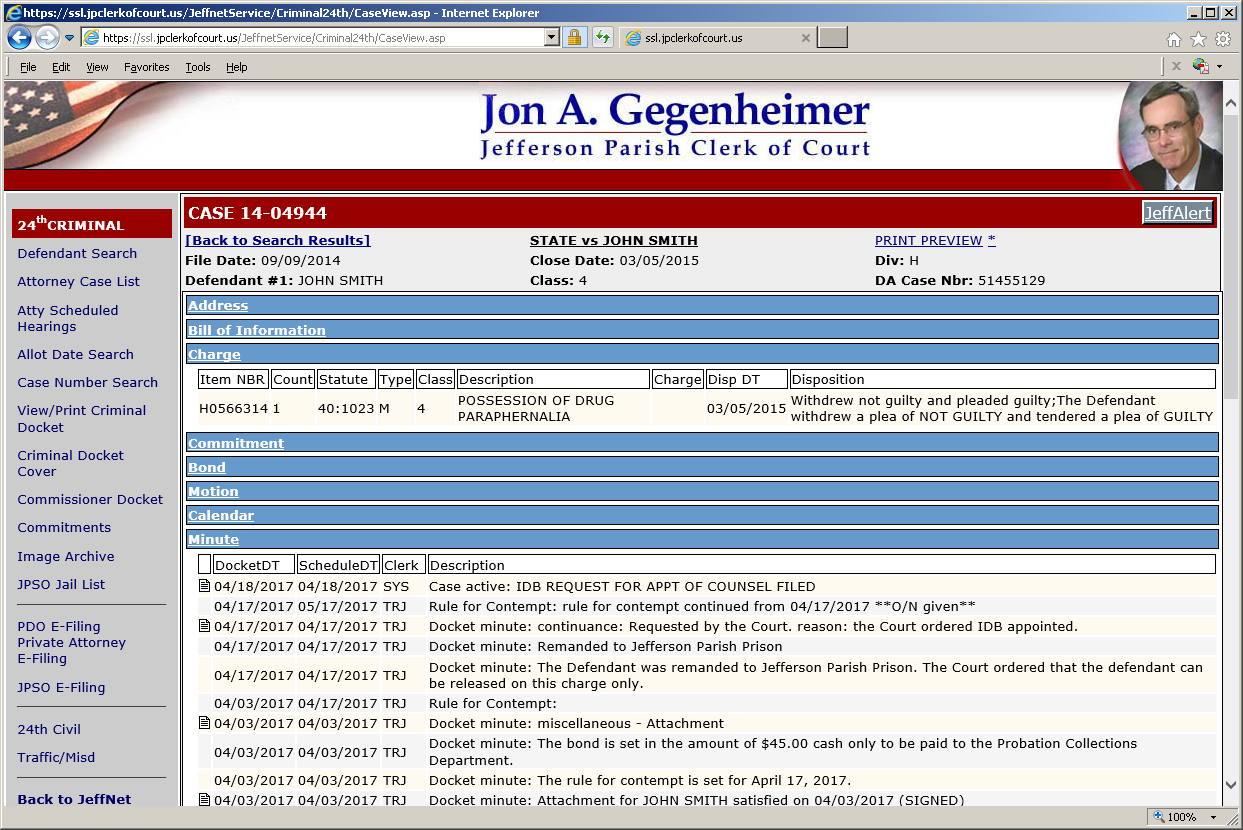
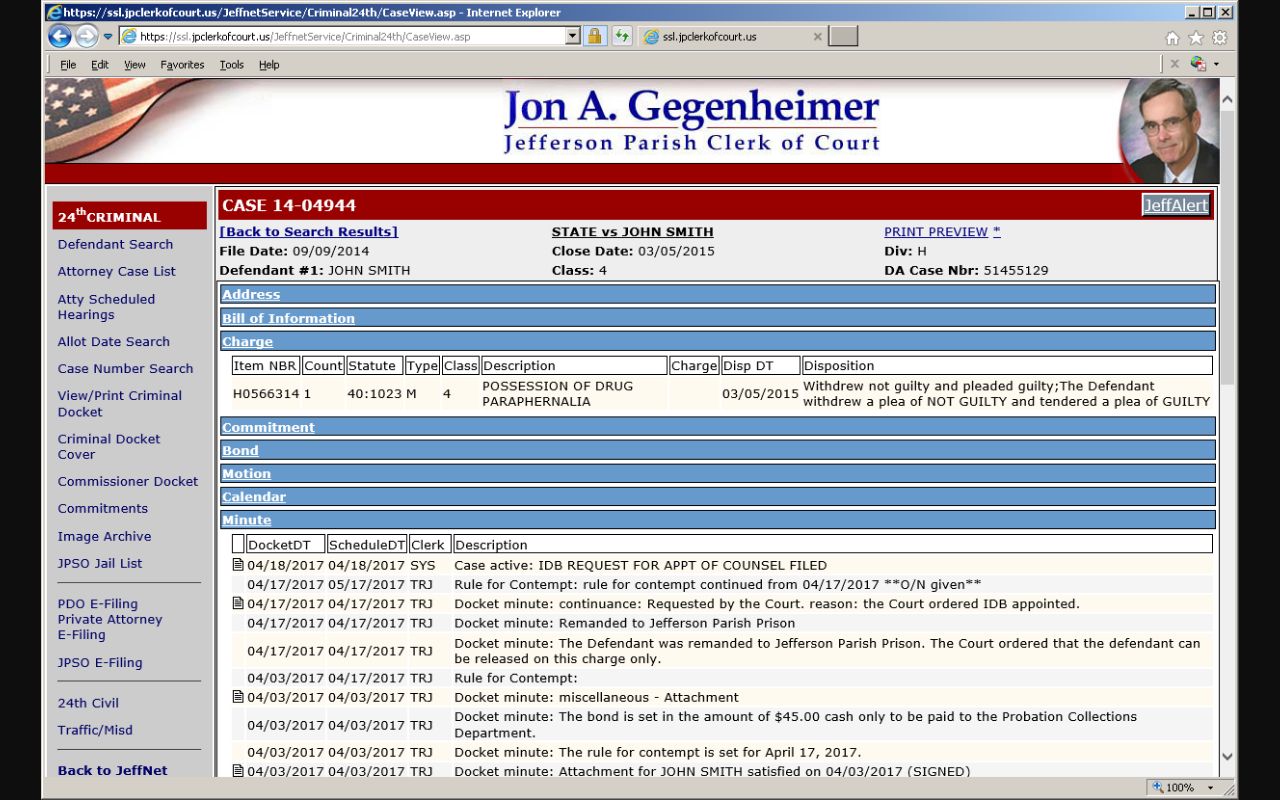
The captured interface supports a careful description without inventing required fields that are not visible before login.
| Field or Control | Type | Required | Use |
|---|---|---|---|
| User ID | Text | For access | Account credential, not a case criterion |
| Password | Password | For access | Opens the subscription system |
| Access plan | Account choice | Yes | 24-hour or monthly access |
| Criminal criteria | Gated form | Unspecified | Verify exact labels after login |
Jefferson Parish Court Copy Costs
Remote access buys speed, not a different custodian. PDFs cost $0.75 per page in JeffNet, and certification adds $5. At the Clerk’s criminal division, public inspection is free during weekday office hours, with no appointment or advance contact required. Physical copies cost $1 per page, certification adds $5, and a Clerk-performed criminal-history search costs $20 for one name. The general Clerk number is 504-364-2900. Mail for district records goes to P.O. Box 10, Gretna, LA 70054-0010.
The Clerk’s published fee page is the best source to check before ordering.
It distinguishes the low-cost online image from a certified copy that carries the Clerk’s authentication.
| Access | Posted Amount |
|---|---|
| JeffNet 24-hour plan | $5 |
| JeffNet monthly plan | $50 per user ID |
| JeffNet document image | $0.75 per page |
| Counter copy | $1 per page |
| Certification | $5 additional |
| Clerk name search | $20 per name |
What the Case File Shows
A Jefferson Parish criminal case file begins after prosecutors choose an accusation. A bill of information is a written charge filed by the District Attorney. An indictment is a grand jury’s formal accusation. Neither should be confused with the booking charge first entered at the jail. The docket then records hearings, motions, pleas, rulings, and the final result.
| Case Number and Court | Identifies the particular district, parish, or municipal file. |
|---|---|
| Charging Document | Shows the accusation actually filed, such as a bill of information or indictment. |
| Docket Entries | Chronological record of filings, hearings, pleas, and court action. |
| Hearing Dates | Lists scheduled and completed events with the assigned division. |
| Disposition and Judgment | States whether the matter ended in dismissal, acquittal, plea, or conviction. |
| Sentence and Conditions | Records punishment and court-ordered terms when applicable. |
Read Jefferson Parish Case Outcomes
Status language matters. “Open” means pending; it does not mean guilty. A nolle prosequi is the prosecutor’s decision not to proceed with that charge. A “no bill” means the grand jury did not indict. A dismissal ends the filed count without a conviction, while “not guilty” records an acquittal after adjudication. A guilty plea or verdict is the conviction event. Always read the final docket entries and judgment together.
- Bill of information
- A charging document filed by the District Attorney.
- Nolle prosequi
- A recorded decision by the prosecutor not to continue a charge.
- No bill
- A grand jury decision not to return an indictment.
- Disposition
- The court record of how a charge ended.
Note: A favorable outcome can coexist with an older arrest entry until lawful correction or expungement changes public access.
Stages of a Jefferson Parish Criminal Case
JPSO or another agency first creates an arrest record. The District Attorney then decides whether and what to file. Once filed, the Clerk’s docket tracks arraignment, motions, hearings, trial or plea, disposition, and sentence. Some cases take another path. The Jefferson Parish Adult Diversion Program includes Pre-Trial Adult, Drug, and DWI tracks for eligible referrals. Successful completion can lead to refused or dismissed charges, but eligibility is controlled by the program and is not automatic.
The official diversion page illustrates this distinct route.
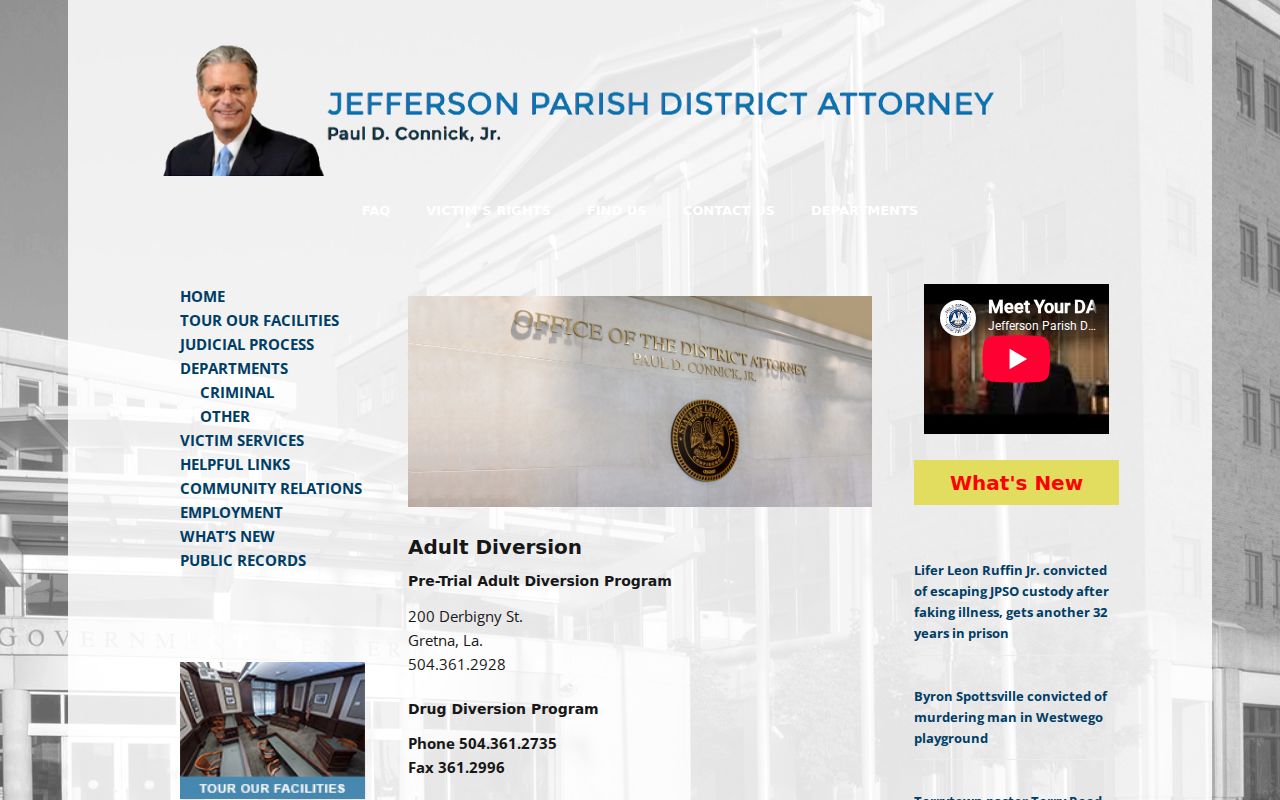
Its outcome must be checked in the prosecution and court record, not inferred from the original booking.
Case flow: Arrest › Booking › Charging decision › Arraignment › Disposition › Sentencing
Daily Docket Is Only a Slice
The Clerk’s free daily docket displays scheduled hearings. Observed columns include record type, division, case number, displayed party name, charge or case description, hearing date and time, and event type. That is useful for today’s court activity, but it does not promise the full case history, filed pleadings, sentence, or disposition.
Remote docket check-in is different again. Its controls include divisions A through P, name search, case and time results, contact fields, and an LA Wallet verification code. Check-in helps a participant report for a hearing; it is not a general public case database. Use JeffNet or the Clerk counter for history.
Jefferson Parish Case Record Restrictions
Louisiana court access is broad but not absolute. The Louisiana Public Records Law supports access to public material, while other laws close juvenile files and protect victim-identifying, confidential, or sealed content. Jefferson Parish Juvenile Court records are not part of the ordinary public criminal search. An online record may also omit data that must be redacted.
If a public case is absent online, contact the proper Clerk division and ask about counter inspection, archive coverage, and nonexempt copies. An expungement removes qualifying records from public access but ordinarily does not destroy them. January 2026 privacy rules also require filers to omit or redact protected personal identifiers, and criminal fax filing ended that month. Those changes affect how records are filed and displayed, not the public’s right to inspect material that remains open.
The 24th JDC site publishes court and docket resources.
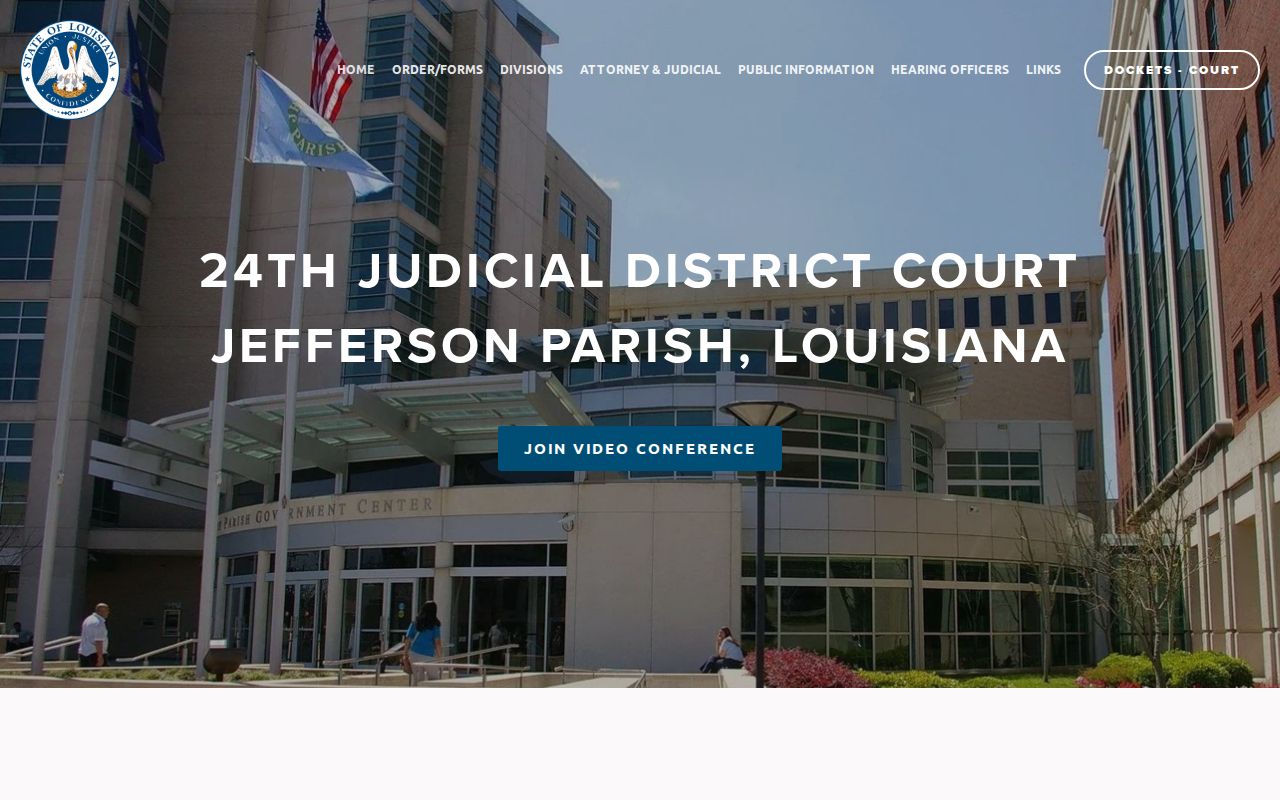
It is also the official place to confirm divisions, dockets, language services, and court operations before a visit.
Match the Record to Its Custodian
Use JPSO inmate search for current parish custody, and the originating police department for its incident report. Use JeffNet or the Clerk for filed Jefferson Parish criminal court cases. A person reviewing their own statewide record must use the Louisiana State Police BCII-LCJIS Right to Review fingerprint process because Louisiana does not offer an unrestricted public statewide name search. For sentenced state custody, use Louisiana VINE through Corrections Services. Federal cases belong in PACER and federal custody in the Bureau of Prisons locator.
This channel split prevents a common error: treating a booking charge as the filed accusation or treating a docket entry as the full statewide rap sheet. When a disposition is missing from a personal LACCH record, obtain the court proof first, then use the BCII-LCJIS correction route.